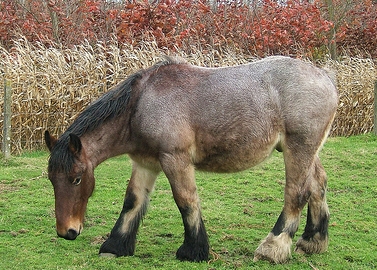
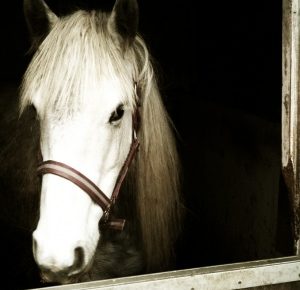
A collapsed airway is known as Laryngeal Hemiplegia, also “roaring” due to the abnormal sound it can make. It commonly affects thoroughbreds, standardbreds and draft horses. A collapsed airway occurs due to the paralysis of the arytinoid cartilage in which vocal folds turn inward constricting airflow in and out of the lungs. It happens when […]
The FDA announced approval of the drug Prascend to treat the clinical signs in horses with Equine Cushing’s Disease. In horses, Cushing’s Disease is known as Pituitary Pars Intermedia Dysfunction (PPID). According to the findings of a recent study by Australian and United Kingdom researchers, PPID usually affects horses above the age of 15. Older […]
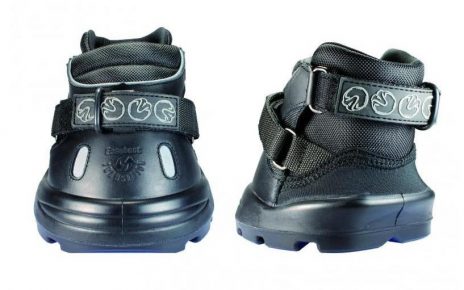
In a study conducted by Santiago D. Gutierrez-Nibeyro, DVM, MS, Dept. ACVS, ACVSMR at the University of Illinois College of Veterinary Medicine, that while they impact a horse’s gait, hoof boots can be beneficial. Many trail riders often provide hoof boots for their barefoot horses, giving the horse protection and traction. Hoof boots also cushion […]