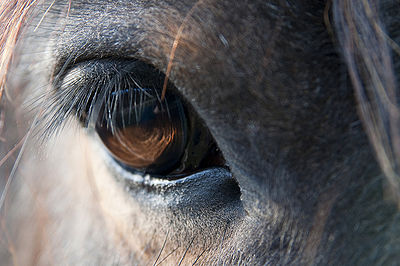
Spanish researchers at the Department of Agro-Forestry Services at the University of Seville (Spain) believe the stress level of a horse can be tested through its eyes with a thermographic camera. Dr. Ester Bartolome Medina PhD at the Agro-Forestry Services believes that a horse’s eye temperature can reflect stress levels during competing show events. In […]
Exercise is very important for everyone, even senior horses. Senior horses need daily exercise to maintain good body form and all around good health, although they may need special attention. Know your senior’s limitations. If s/he has any physical or medical problems, check with your veterinarian as to the intensity of the exercise that is […]
A 20 year old or older horse is considered senior and requires some special care. Older horses need special attention paid to their dental care. Their teeth should be checked once a year. If their teeth fall out or become uneven, the horse will not be able to eat properly. Some older horses may need […]